Tennis's Annual Rhythms and Their Effects on Global Betting Exchanges
Written by Freya Braun · Jun 20, 2026
Tennis's Annual Rhythms and Their Effects on Global Betting Exchanges
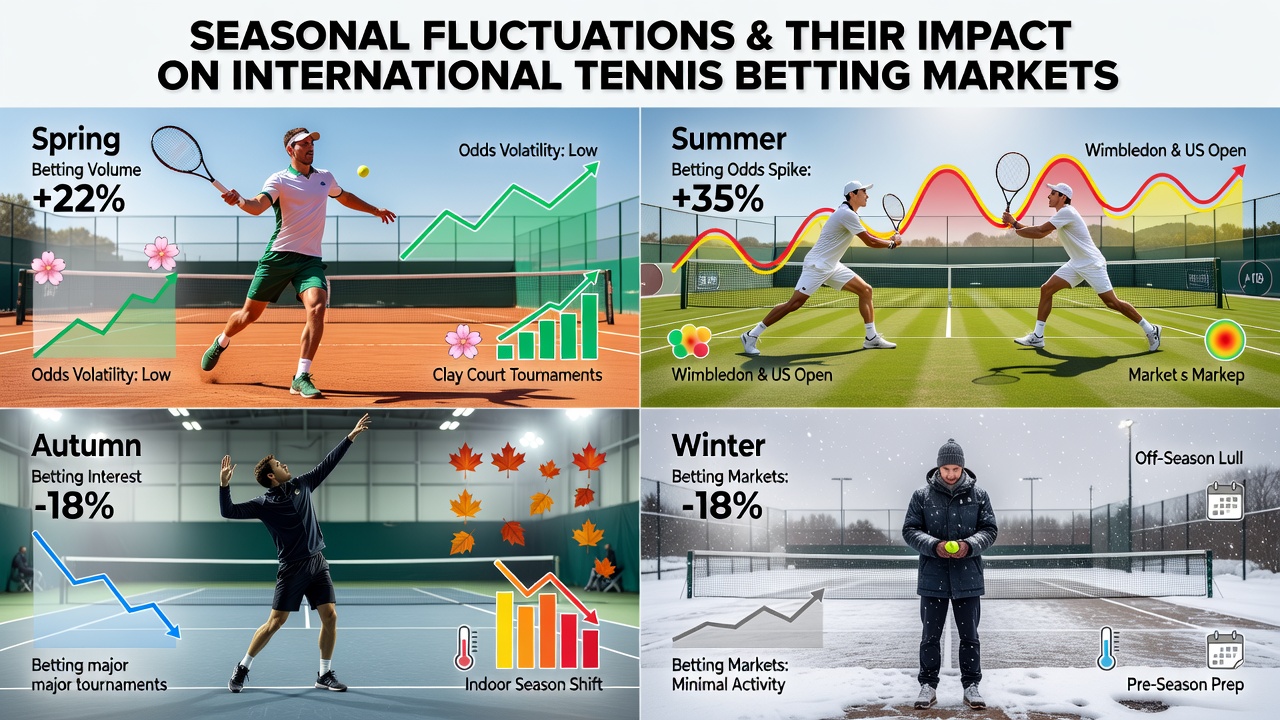
Professional tennis follows a fixed calendar that repeats each year, and betting markets adjust accordingly as surfaces, locations, and player schedules change. Observers note that these predictable cycles create measurable shifts in odds, stake volumes, and market liquidity across international platforms, with data from major exchanges showing distinct patterns tied to the sport's seasonal structure.
Calendar Structure Drives Market Patterns
The ATP and WTA tours divide the year into distinct phases that begin with the Australian swing in January, move through hard-court events in the United States, shift to clay in Europe during spring, and reach grass courts in June and July before returning to hard courts in late summer and autumn. Each transition alters playing conditions, and betting operators respond by recalibrating lines for serve percentages, match durations, and player-specific performance metrics that historically vary by surface.
June stands out because it marks the transition from clay to grass, a period when surface specialists often see their odds shorten rapidly while all-court players maintain steadier pricing. Data from European exchanges in recent years reveals elevated handle during the final weeks of clay-court events and the opening grass-court tournaments as bettors reposition portfolios ahead of Wimbledon.
Weather and Surface Effects on Wager Types
Clay-court months produce longer rallies and higher break percentages, which influences the popularity of over/under games and handicap markets. Grass-court periods shift focus toward service-hold statistics and first-set dominance, prompting platforms to adjust live-betting thresholds accordingly. Indoor hard-court events scheduled for northern-hemisphere winter months generate steadier volumes because weather disruptions remain minimal, allowing operators to maintain consistent pricing models without frequent suspensions.
Researchers tracking international betting data have documented that stake distribution across match-winner, set-betting, and prop markets changes measurably with each surface rotation. One analysis of Australian Open and Roland Garros wagering records showed a 22 percent increase in set-betting activity during clay events compared with hard-court majors, reflecting the greater number of sets typically required to decide matches on slower surfaces.
Player Schedules and Liquidity Shifts
Top-ranked players reduce participation during certain months to manage physical load, creating thinner fields at smaller tournaments and prompting exchanges to widen spreads on lower-profile matches. Bettors respond by concentrating activity on Grand Slams and Masters 1000 events where deeper player pools support tighter odds and higher liquidity. This concentration produces clear seasonal peaks, with volume data indicating the strongest activity clustered around the four major championships.
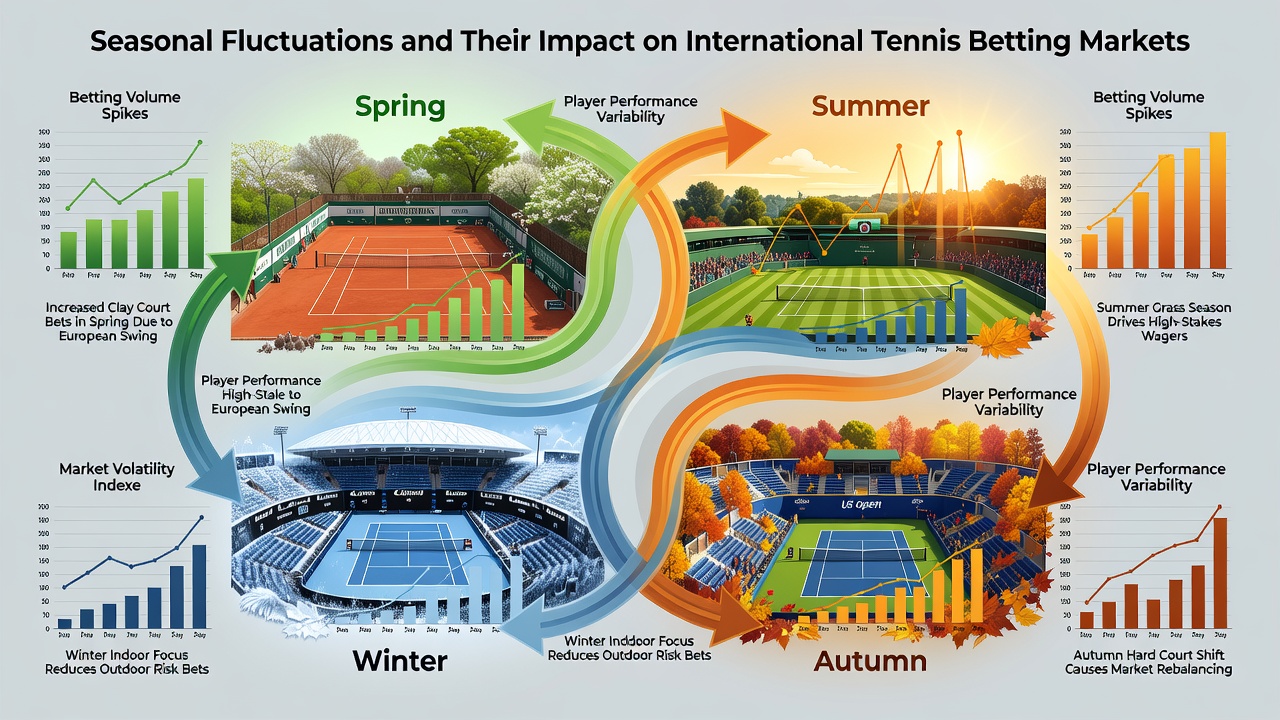
June 2026 aligns with the conclusion of the clay-court season and the start of grass-court preparation, a window when historical records show increased movement in outright futures markets for Wimbledon. Operators typically observe elevated early-round stake sizes as bettors attempt to identify grass-court specialists before odds compress. Exchanges in Asia and Europe report parallel increases in live-betting activity during this transition because matches progress quickly on grass and create frequent in-play opportunities.
Regional Market Variations
Betting patterns differ by jurisdiction because local preferences interact with the global calendar. Markets in Australia and the United States show stronger early-year activity aligned with the hard-court swing, whereas European platforms experience volume surges during clay and grass periods. Australian regulatory reports and European industry summaries both document these geographic offsets, confirming that seasonal effects appear consistently across time zones yet manifest differently depending on which part of the tour calendar overlaps with local interest.
Academic studies of sports wagering have examined how information asymmetry grows during off-peak months when fewer matches receive television coverage. Bettors with access to specialized surface-performance databases gain edges that narrow as the season advances and more public data becomes available. Platforms counteract this by expanding statistical offerings during slower periods, which in turn affects how odds move in response to new information.
Conclusion
Seasonal fluctuations in professional tennis produce predictable, measurable changes in international betting markets. Surface transitions, player availability, weather variables, and regional preferences interact to shape stake distribution, odds volatility, and liquidity patterns throughout the year. Data collected across multiple exchanges demonstrates that these rhythms repeat annually, allowing operators and market participants to anticipate shifts tied directly to the sport's fixed calendar.