Referee Assignment Patterns Shape Card Trends Across European Championship Fixtures
Written by Freya Braun · Jul 23, 2026
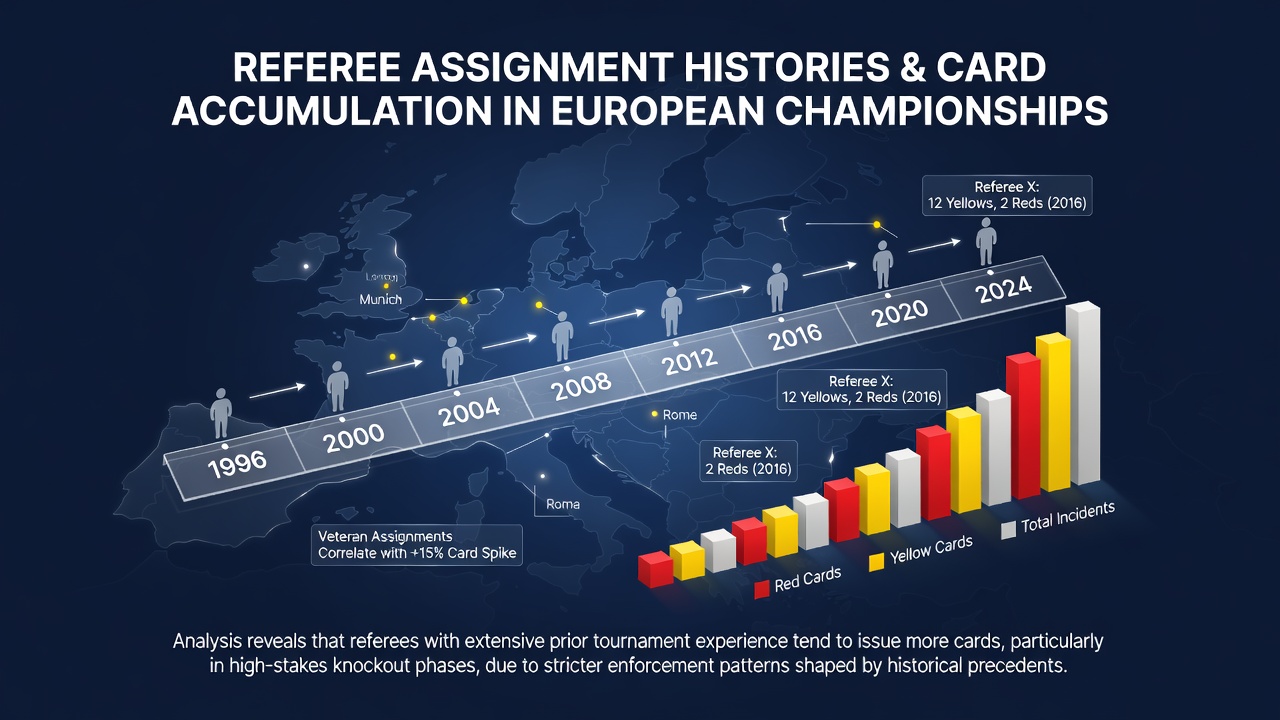
Referee Assignment Patterns Shape Card Trends Across European Championship Fixtures
European Championship tournaments have long provided researchers with clear datasets on how referee histories affect the number of cards shown in matches, and assignment decisions made by UEFA continue to reflect those patterns. Tournament organizers review past performances when selecting officials for group stage and knockout fixtures, which in turn influences the average cards per game recorded across each edition of the competition.
Data from previous tournaments shows that referees with histories of stricter enforcement receive assignments in matches involving teams known for physical styles, while those with lower card rates often handle fixtures between sides that favor possession-based approaches. This matching process creates measurable shifts in total disciplinary actions, according to records maintained by continental governing bodies.
Historical Data on Referee Card Rates
UEFA maintains detailed logs of every card issued during European Championships, and analysts have tracked individual referee averages over multiple tournaments. Referees who averaged more than five cards per match in domestic leagues tend to maintain similar rates when assigned to international fixtures, whereas those below four cards per game show consistent restraint across borders. These patterns hold steady because assignment committees prioritize experience and style compatibility when building match rosters.
Observers note that the 2020 tournament produced an average of 4.8 cards per game, while the 2016 edition recorded 4.3, and variations align closely with the specific officials selected for high-profile clashes. Teams that study these histories adjust their tactical setups accordingly, reducing challenges in areas where stricter referees operate most frequently.
Assignment Criteria and Their Effects
UEFA's selection process evaluates referees on consistency, fitness levels, and previous disciplinary records before placing them in particular matches. Officials with elevated yellow card counts in qualifying rounds often receive group stage games featuring teams that finished lower in their domestic standings, whereas top performers handle later knockout rounds. This tiered approach creates predictable distributions of cards across the bracket.
Researchers have examined how these assignments correlate with match outcomes, finding that teams facing referees with higher historical averages receive more cautions in the first half. The data reveals that second-half card rates remain steadier regardless of official, suggesting fatigue and scoreline pressure play larger roles than referee identity alone once play resumes after halftime.
Regional Variations in Enforcement Styles
Referees from different European associations bring distinct approaches shaped by their domestic leagues, and these differences appear in tournament statistics. Officials from leagues that emphasize physical contact issue fewer cards on average than those from competitions that prioritize technical play, yet UEFA attempts to balance assignments so no single style dominates an entire tournament. This balancing act produces more uniform card totals across all matches than would occur with random selection.
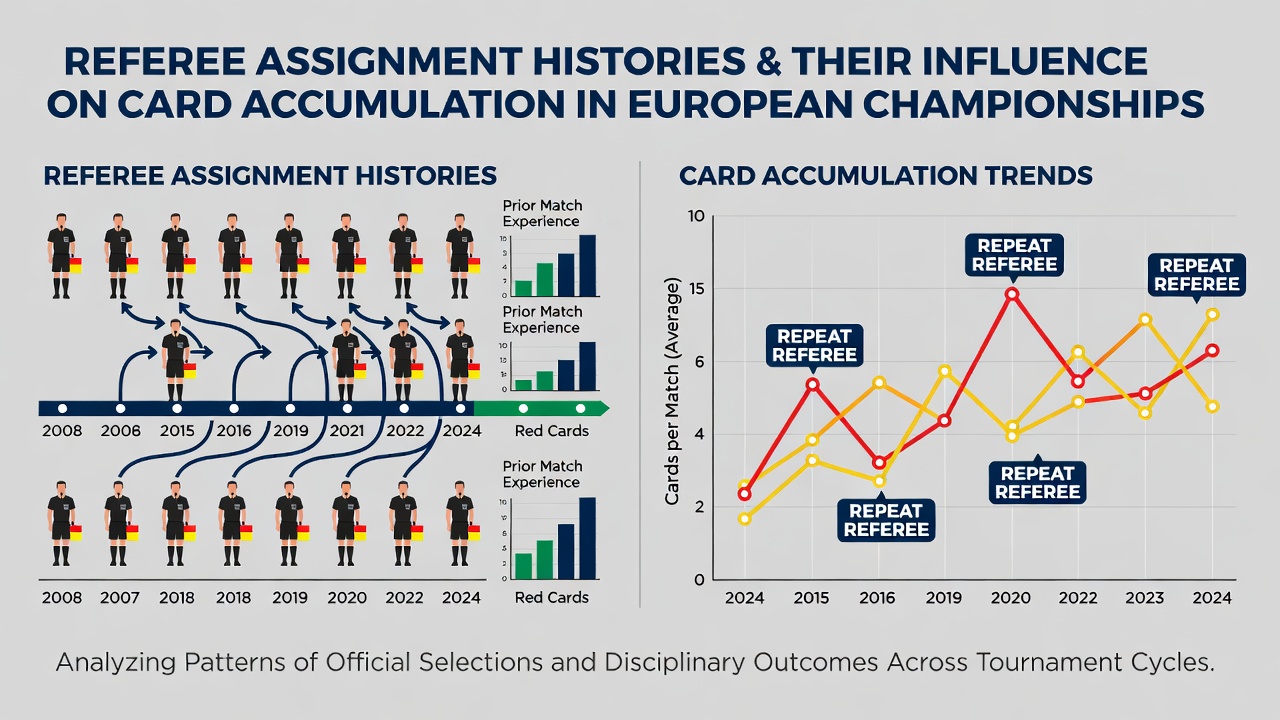
Analysis of the 2024 tournament showed that referees from Northern European associations averaged 4.1 cards per game, while those from Southern associations reached 5.2, and the spread narrowed when UEFA paired officials with video assistant referees who had complementary experience. Teams preparing for July 2026 qualifiers have already begun reviewing updated assignment protocols released earlier that year to anticipate similar patterns in upcoming fixtures.
Impact on Team Strategies and Player Discipline
Coaches incorporate referee histories into pre-match briefings, instructing players to avoid certain challenges when facing officials known for quick bookings. This preparation reduces unnecessary fouls in early tournament stages, though it also leads to fewer goals from set pieces when teams adopt more cautious positioning. Statistical reviews confirm that player suspensions increase in knockout rounds precisely because referee assignments shift toward those with stricter historical records.
Studies from academic institutions across multiple continents, including work published through Canadian research networks, have quantified how card accumulation affects tournament progression. Teams that accumulate fewer than two cards per game advance to quarterfinals at higher rates, yet this metric correlates strongly with the specific referees assigned rather than team quality alone.
Conclusion
Referee assignment histories directly influence card totals at European Championships through deliberate selection processes that match official styles to match contexts. UEFA continues to refine these protocols using data from past tournaments, creating measurable effects on player behavior and overall disciplinary statistics. Teams that track these patterns gain tactical advantages, while the underlying data sets grow richer with each new edition of the competition.