Allocating Assets Across Arenas: Diversified Approaches to Maintaining Stability in Wagering Portfolios
Written by Avery Franke · Jul 27, 2026
Allocating Assets Across Arenas: Diversified Approaches to Maintaining Stability in Wagering Portfolios
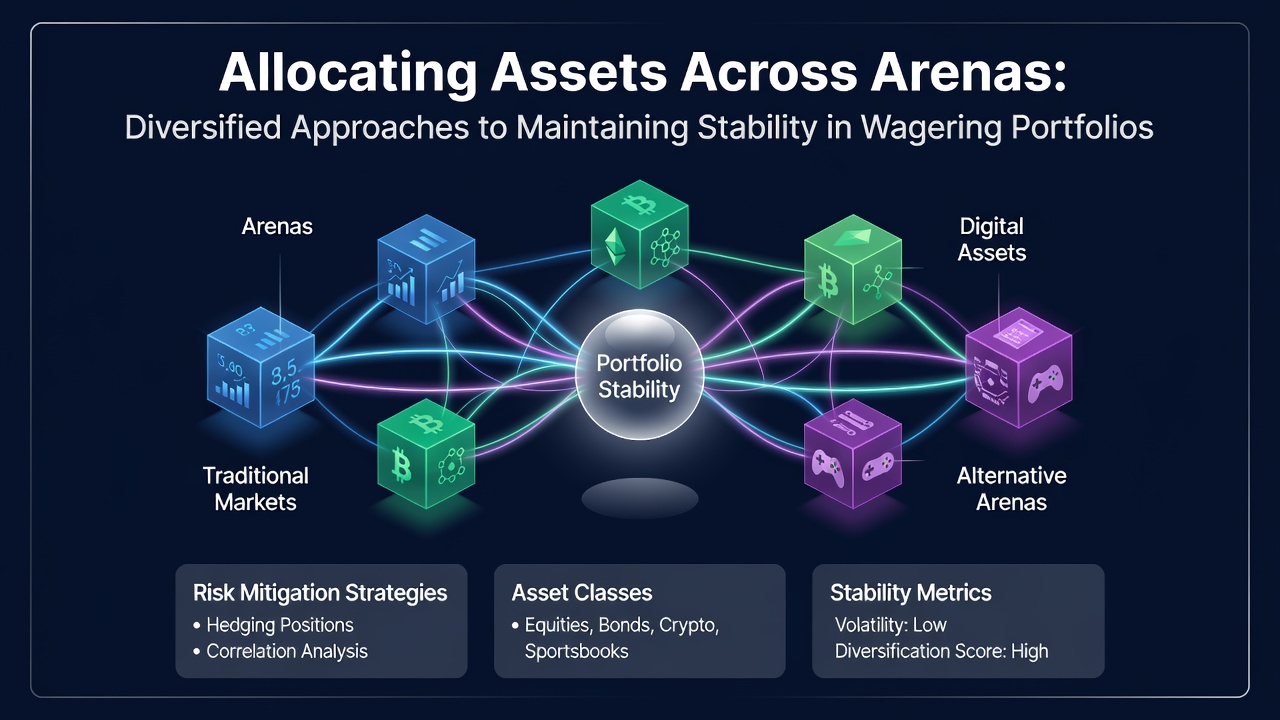
Asset allocation in wagering portfolios involves spreading stakes across unrelated markets to reduce the impact of variance in any single arena, and researchers have examined this practice through frameworks adapted from traditional finance models. Data from international gaming reports show that participants who distribute exposure among sports betting, table games, and pari-mutuel wagering often experience lower drawdown periods compared with those concentrated in one category. In July 2026 regulatory filings from several jurisdictions highlighted continued growth in multi-channel betting activity, underscoring the practical interest in balanced exposure strategies.
Core Principles Behind Portfolio Construction
Modern portfolio theory applied to wagering rests on the observation that returns from different betting categories exhibit varying degrees of correlation. Studies published by academic institutions such as the University of Nevada, Las Vegas Gaming Research Center demonstrate that outcomes in horse racing and sports betting frequently move independently, while certain casino games display lower covariance with both. Observers note that constructing a portfolio begins with identifying these relationships through historical performance records rather than relying on single-event outcomes. Allocation percentages are then set according to measured volatility within each arena, allowing the overall portfolio to absorb losses in one segment without triggering forced reductions elsewhere.
Spreading Exposure Across Distinct Arenas
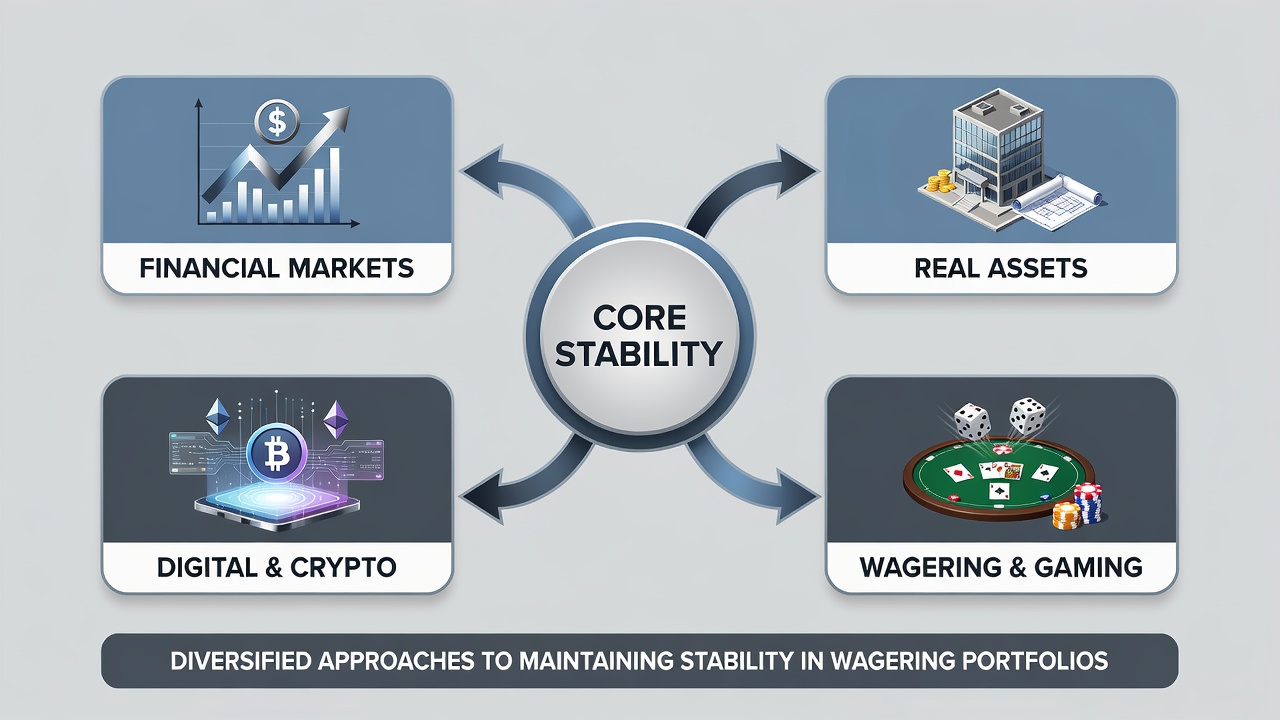
Participants typically divide capital among at least three primary arenas: fixed-odds sports markets, random-outcome casino offerings, and skill-influenced formats such as poker or blackjack tournaments. Figures released by the Nevada Gaming Control Board indicate that sports betting volume in the state continued to expand through the first half of 2026, while slot and table-game revenue maintained separate growth trajectories. Because these segments respond to different external factors, simultaneous adverse movements across all arenas remain statistically uncommon. Those managing larger portfolios often assign initial weights based on liquidity and data availability, then rebalance quarterly to restore target percentages when one arena outperforms.
Implementation Techniques Used by Practitioners
Rebalancing protocols involve periodic review of realized returns followed by transfers that bring each arena back to its predetermined share. Research from the Australian Gambling Research Centre shows that automated tracking tools, which flag deviations exceeding preset thresholds, help maintain discipline during periods of elevated activity. Correlation matrices updated with fresh data allow adjustments when previously independent markets begin to move together, a situation observed during major international sporting events that coincide with casino promotions. Position sizing within each arena further incorporates individual event variance estimates, ensuring no single wager exceeds a calculated fraction of the allocated segment.
Monitoring Correlations and Adjusting Allocations
Continuous measurement of cross-arena correlations forms the operational backbone of stability-focused strategies. Data compiled by Canadian provincial regulators, including the Alcohol and Gaming Commission of Ontario, reveal seasonal shifts in betting patterns that can temporarily increase or decrease interdependence between sports and casino segments. Portfolio managers respond by lowering exposure to the more correlated arena or introducing an offsetting category such as lottery-style draws or e-sports markets. In practice, these adjustments occur after reviewing rolling 90-day performance statistics rather than reacting to isolated results. The process keeps overall portfolio volatility within defined bands even as individual arena results fluctuate.
Case Examples from Established Markets
One documented approach appears in European online platforms that segment user accounts into separate ledgers for sports, live casino, and virtual products. Records maintained by the Malta Gaming Authority indicate that accounts employing ledger separation recorded fewer instances of complete capital depletion during the 2025-2026 period. Another pattern emerges from North American sportsbook operators that offer integrated casino sections; internal analytics shared with academic partners demonstrate that users who maintain simultaneous balances across both product lines sustain longer engagement intervals. These examples illustrate how structural separation of arenas supports the mechanical application of diversification rules without requiring constant manual intervention.
Conclusion
Allocation across arenas therefore functions as a documented method for moderating portfolio-level volatility through deliberate distribution of capital. Evidence gathered from regulatory filings, academic analyses, and operator data consistently points to reduced amplitude of drawdowns when exposure remains spread among categories with historically low correlations. Practitioners who apply periodic rebalancing and correlation monitoring maintain target risk parameters across changing market conditions. The approach continues to receive attention in 2026 filings from multiple jurisdictions as participants seek measurable stability within wagering activities.